WordPress vs. Custom-Built Websites: Which One Actually Grows Your Business?
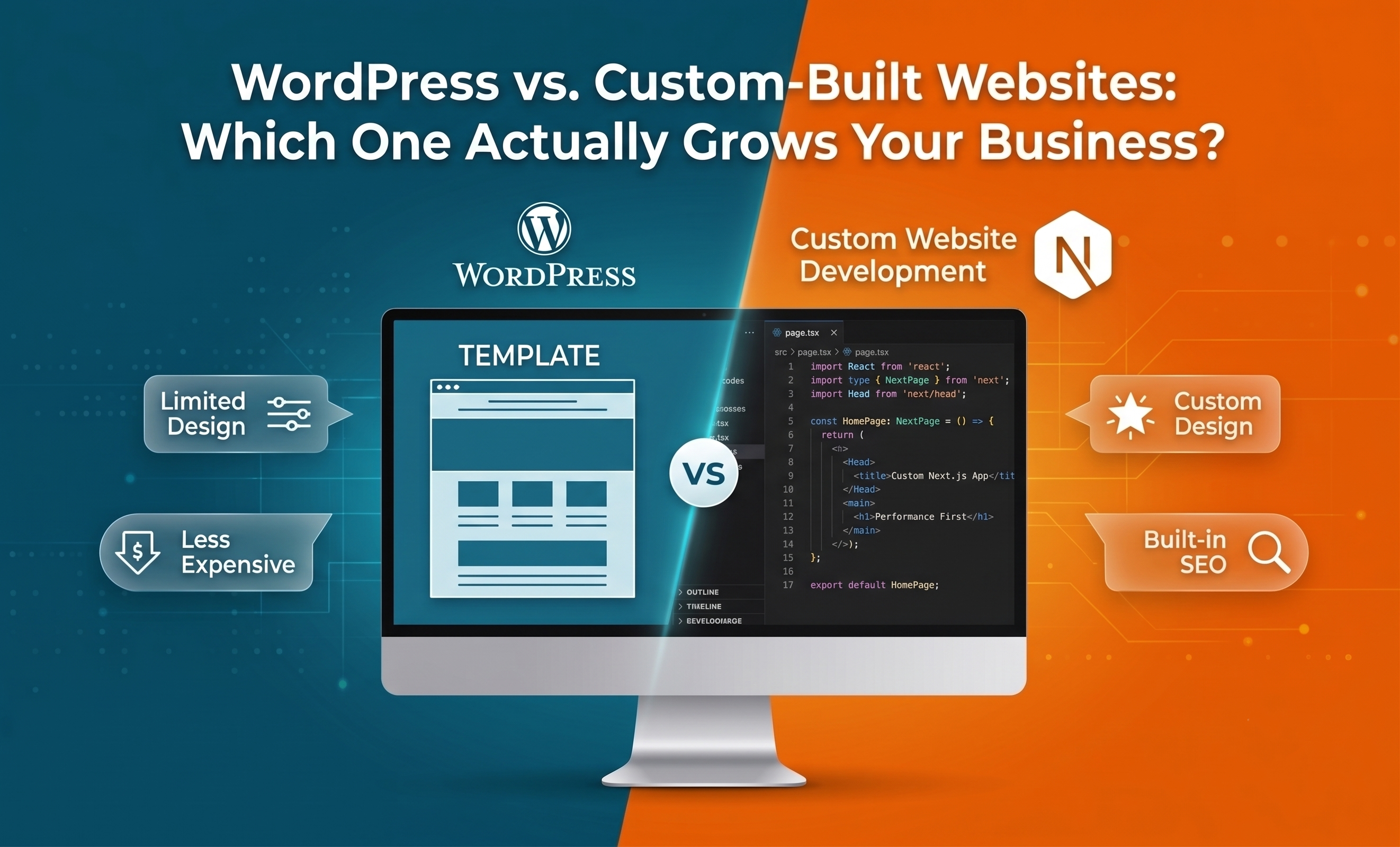
If you've been looking into getting a website built, you've probably run into this fork in the road pretty quickly: do you go with a platform like WordPress, Wix, or Shopify — or do you get something custom-built from scratch?
Both routes can work. But they solve different problems, and picking the wrong one for your situation is one of the most common (and expensive) mistakes we see businesses make. So let's break it down properly.
What “CRM Platforms” Actually Means Here
When people say WordPress, Wix, Shopify, Squarespace, etc., what they're really talking about is a pre-built system — a foundation someone else engineered, that you customize using themes, plugins, and a drag-and-drop editor. You're building on top of someone else's code.
A custom site, on the other hand, is built from the ground up for your specific business — your own code, your own structure, nothing you don't need sitting in the background.
Where Platforms Like WordPress Win
To be fair, platforms exist for good reasons:
- Speed to launch — a basic site can be up in days, not weeks.
- Lower upfront cost — themes and plugins are often cheaper than a full custom build.
- Easy content edits — anyone on your team can log in and update text or images without touching code.
- Huge plugin ecosystem — need a booking form or a basic store? There's probably a plugin for that.
For a small business that just needs a simple, no-frills presence online — a menu, a contact page, some photos — this can genuinely be enough.
Where Custom Builds Win
The tradeoffs start showing up as your business grows or gets more specific about what it needs:
- Speed & performance — plugin-heavy platform sites tend to get bloated. Every plugin adds extra code your site has to load, which slows things down — and speed directly affects both user experience and Google rankings. Custom sites carry only the code they actually need.
- Security — a huge share of website hacks happen through outdated or vulnerable plugins. Fewer moving parts means fewer doors left open.
- Design flexibility — themes look like themes. If you want something that doesn't look like every third competitor's site, custom design gives you a look that's actually yours.
- Scalability — as your business adds features — custom booking systems, dashboards, integrations with other tools — platforms start fighting you. Custom code is built to grow with you instead of around a template's limitations.
- Long-term cost — platforms feel cheaper on day one, but plugin subscriptions, premium themes, and constant patch-fixing add up. Custom builds cost more upfront but tend to need far less ongoing firefighting.
So Which One Should You Pick?
Honestly — it depends on where your business is right now.
-
If you're testing an idea, need something live fast, and budget is tight → a platform is a reasonable starting point.
-
If you're an established business relying on your website for real leads, sales, or brand credibility, and you're tired of your site feeling slow, generic, or held together with plugins → custom is where you get real, compounding returns.
We've had plenty of clients come to us after outgrowing a WordPress site that had become slow, hard to manage, and full of plugin conflicts. Migrating to a custom build fixed problems they didn't even realize were platform-related.
The Bottom Line
There's no universally “correct” answer here — just what's correct for your stage of business. What matters is not picking a platform because it's popular, and not picking custom because it sounds impressive. Pick based on what your site actually needs to do for you.
Not sure which route fits your business? Drop your website (or your situation) in our mail — happy to give an honest take, not just a sales pitch.